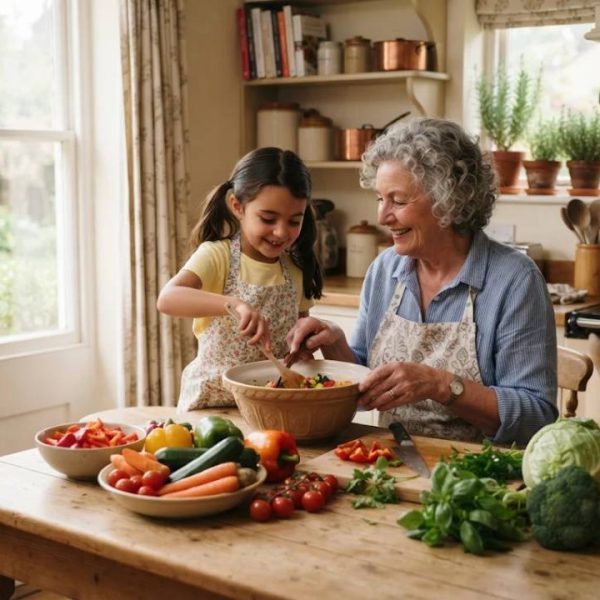
Every family has a few recipes that smell like home. A soup that appears whenever someone is ill, a cake that marks every birthday, a stew that takes all Sunday and fills the house with steam. These dishes carry more than flavor. They carry stories about grandparents, migrations, harvests and holidays. Yet many family recipes exist only in memory or on stained index cards written in a hurry. This guide shows how to collect, test, write down and share them, so that the taste of your family reaches the next generation.
Start by Talking and Listening
The best recipe collection begins with a conversation. Sit down with the relatives who cook, bring a notebook or a phone for recording, and ask them to describe how they make a favorite dish. Let them tell stories while they talk, since the details about where a recipe came from and when it was served are as valuable as the ingredient list.
Ask open questions such as what you do first, how you know when it is ready and what you would never change. These answers reveal the small techniques that old cooks do without thinking and that never appear in printed books.
Capture Measurements That Do Not Exist
Traditional cooks often use a handful, a pinch, a glass or simply look and taste. To preserve the recipe, cook alongside them with a kitchen scale and measuring spoons, and write down what they actually use. Weigh flour before it goes in, count spoonfuls of salt and note the size of the pan and the heat level.
Cook the dish together at least once while measuring everything, because this is the only reliable way to turn an inherited habit into a repeatable recipe.
Write Clear, Friendly Instructions
Use a simple structure: a short introduction with the story, the list of ingredients with quantities, numbered steps and notes about serving, storage and variations. Write steps in the order you do them, include times and visual cues such as golden edges or thick bubbles, and state oven temperatures in both Celsius and Fahrenheit if you share across countries.
Keep the voice of the family. A line such as grandmother always says the dough should feel like an earlobe makes the page memorable and useful.
Test, Adjust and Record Results
Cook each recipe at least twice from the written version, preferably with someone who has never made it. Their questions will show where the instructions are unclear. Take photographs of key steps and of the finished dish, and note how many people it serves and how long it keeps.
Do not erase family variations. Add notes that say my aunt uses more garlic or in the village they add walnuts, so that every branch of the family recognizes its version.
Preserving Recipes From Other Countries
Many families have recipes that crossed borders with emigrants. Ingredients may differ in the new country, and names for dishes vary between regions. Write the original name in its own script and a simple English explanation, and list substitutions that work with local ingredients. For Greek dishes, for instance, explain how to choose feta, olive oil or fresh oregano.
Families who want to publish or share a cookbook in several languages often rely on english to greek translation so that the text is accurate and the names of dishes are spelled correctly.
Record Voices and Stories
Recipes are even more precious when you can hear the person who made them. Record short videos or audio clips of relatives cooking and telling stories. Clear sound and good light matter more than expensive equipment. Our article on recording and voice-over of family stories explains how recordings can be transcribed and narrated so that they are easy to read and share.
Label every file with the name, date and dish, and keep backups in more than one place.
Food Safety for Traditional Methods
Some traditional methods, such as home canning, fermenting, smoking and slow cooking at low temperatures, need extra attention to safety. Check cooking temperatures, storage times and cleanliness against current guidance. The WHO food safety fact sheet gives straightforward rules for handling, cooking and storing food that apply to every kitchen.
Write safety notes into the recipe where needed, and do not skip them out of nostalgia.
Choose a Format to Share
A family recipe book can be a printed booklet, a spiral-bound folder, a shared digital document or a simple website. Print copies make wonderful gifts, while digital versions are easy to update and can include photos and video links. Choose a clear font, leave space for notes and add a short index.
Ask relatives to contribute their own favorites, and credit each person.
Make Cooking a Shared Tradition
Invite children to help in the kitchen from an early age. Let them wash vegetables, stir, taste and decorate. Keep a family cooking day each month, and choose one recipe to practice together. Skills and stories pass naturally in these moments.
Photographs of each session become part of the collection.
Adapt Recipes to Modern Needs
Families change, and so do diets. Offer lighter, vegetarian or allergy-friendly versions beside the original, and clearly mark them. Explain what changes in taste and texture, and keep the traditional version intact.
Respecting the original while welcoming new needs keeps recipes alive.
Keep Original Documents Safe
Scan handwritten cards and notebooks, and store the originals in acid-free sleeves away from moisture. Digital copies protect against loss, and they allow you to share with relatives abroad.
Add a short description for each scan.
Final Thoughts
Preserving family recipes is a gift of time, attention and love. Listen to the cooks, measure carefully, write clearly, test thoroughly and share generously.
Each recipe you save keeps a voice alive.
Holiday Traditions and Seasonal Menus
Many dishes belong to a specific day or season. Record when the dish is served, who traditionally prepares it and what it means. Organize the collection by season, with menus for winter holidays, spring celebrations, summer gatherings and harvest feasts. Add notes on table decorations, songs and customs that go with the food.
These details turn a cookbook into a family history.
Shopping Lists and Planning
Add a simple shopping list and timeline to complex recipes, so that beginners can prepare in advance. Mark steps that can be done a day earlier, and list equipment needed. Good planning removes stress from big meals and encourages younger relatives to try.
Include estimated costs if helpful.
Sharing Beyond the Family
Some families publish their collection for friends, community groups or charity sales. Check permissions from relatives, test every recipe and proofread carefully. Offer a short introduction explaining the family story, and credit photographers and contributors.
A well-made book becomes a lasting gift.